Listen to the whole Mac
Hertzlight hears what your Mac is playing, straight from the source, so your keyboard and the dog stay out of the results.
Where it goes, how it looks
It listens to
Any source. Every setting changes live, without stopping the music.
It goes
From a strip on your wallpaper to the whole of the telly.
It looks like
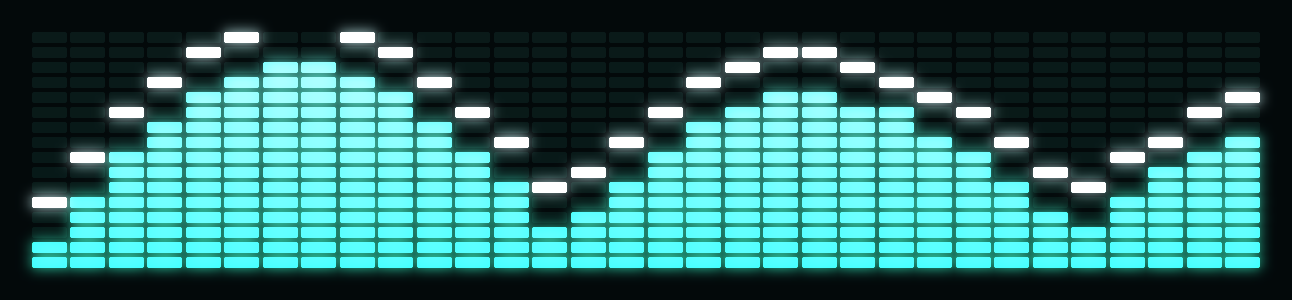
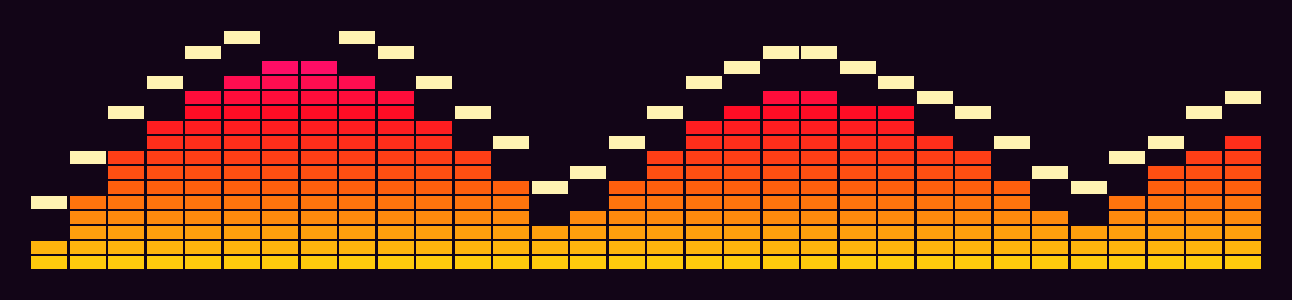
Twelve skins, with bloom and scanlines for the dramatic.
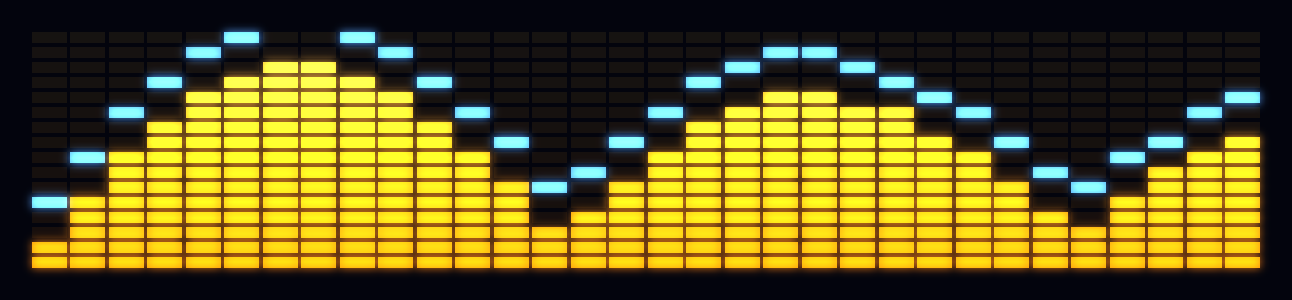
Hi-Fi EQ. Yellow segments and pale blue peaks, like the graphic equaliser on a 1980s stack. Point at any name to see what it does.
How a song becomes light
First, it listens. Your Mac's audio arrives 48,000 samples a second. Hertzlight takes 2,048 at a time and softens the edges of each slice with a Hann window, so the maths doesn't hear clicks that aren't there.
X(k) = Σ x(n) · e−2πikn/N
The discrete Fourier transform, done the fast way.
Then the maths. A fast Fourier transform asks how much of each frequency is in the slice. So while my physics degrees have often been helpful, they've never resulted in anything pretty to look at until now.
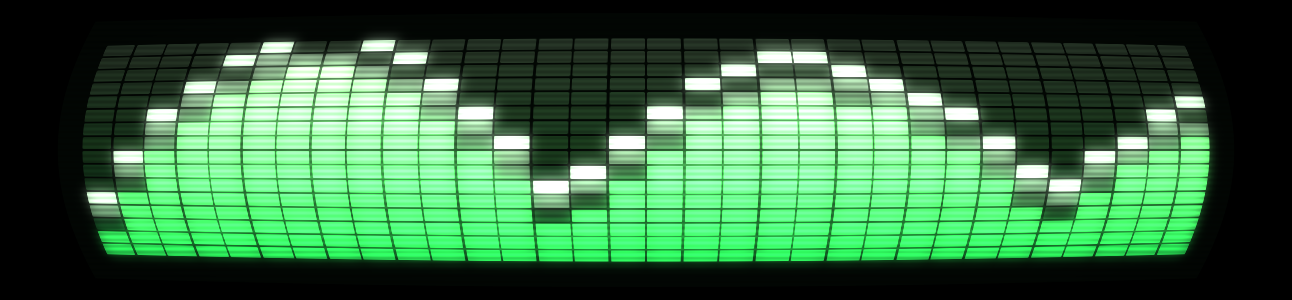
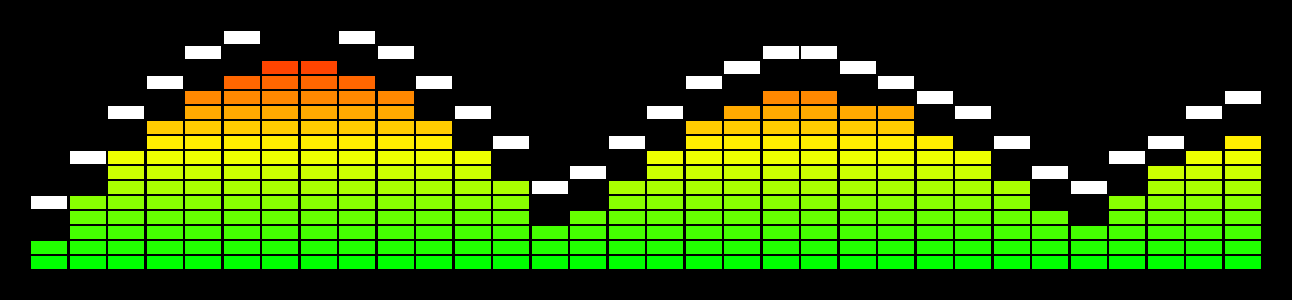
Then the bars. The answers are grouped into bands spaced the way your ears hear, turned into decibels, and smoothed so they jump up fast and fall like a real meter, with a small peak that hangs on for a moment.
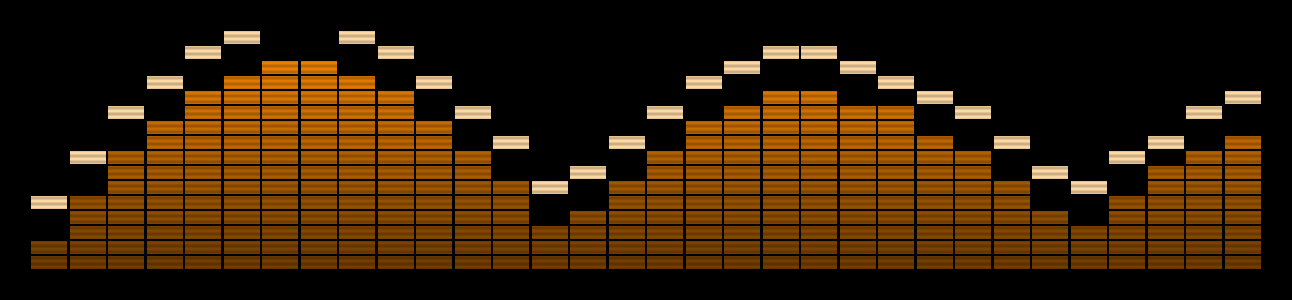
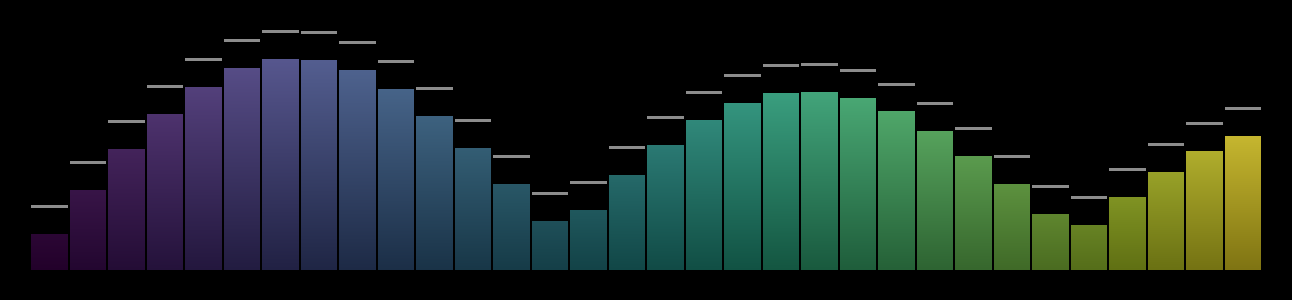
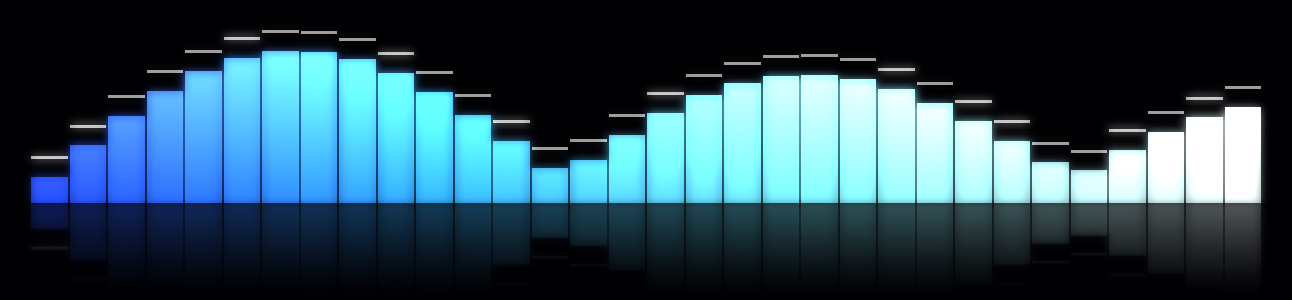
Amber, Viridis and Glass, drawn by the app's own renderer.
Sixty times a second. The analyser is written in Rust and the bars are drawn with Metal, so it's light enough to leave running all day while you work. The bass is doing its best.
£2.99, once.
Then it's yours.
Every skin, every placement and the iPhone app, with updates included. There's nothing to sign up for and nothing to renew.
Questions
Does it record my audio?
No. The sound is analysed on your Mac, turned into bar heights and thrown away. Nothing is recorded, and nothing leaves the Mac.
Will it work with Spotify?
Yes, and with Apple Music, YouTube in a browser, a DAW or anything else that makes a sound. Pick System Audio, or just the one app.
Which Macs?
macOS 14.2 or later, on Apple silicon. The iPhone app runs on iOS 17 or later.
Is there AI in it?
No. It listens, does the maths and draws the bars, and that's the whole app. Makes a nice change.
Is it a subscription?
No. You pay once on the App Store and it's yours, updates included.
Where was it made?
In Bristol, in the United Kingdom, by a father, CrossFitter and music enthusiast. Currently listening to Abdullah Ibrahim and Frazey Ford. My son likes Slipknot, which makes Hertzlight go wild.